Rock Chip or Full Replacement? How to Tell
The gap between a quick resin fix and a full windshield swap usually comes down to three things: how big the chip is, where it sits, and how long it's been left alone.
August 27, 2026 · 4 min read
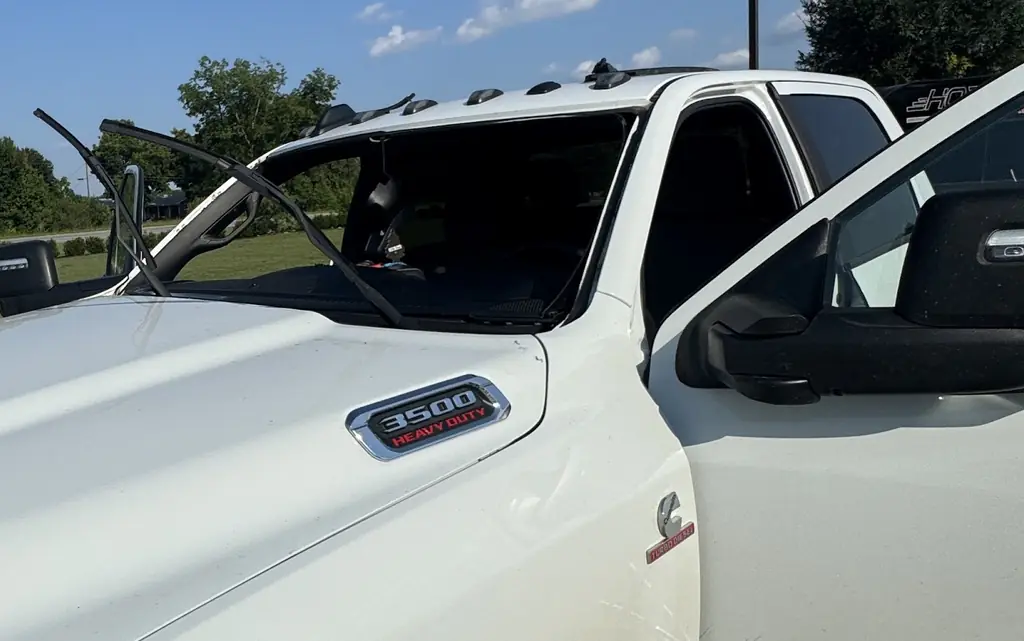
A cracked windshield doesn't start as a crack. It starts as a chip, usually smaller than a dime, kicked up by gravel or a passing truck tire somewhere on I-75 or one of the back roads around Byron. What happens to that chip over the next few days decides almost everything. Whether it turns into a quick fix or a full glass swap isn't luck. It comes down to a handful of things a technician can spot in about a minute of looking, and most of them are within your control if you act while the chip is still small.
How a chip repair actually works
A chip repair doesn't hide the damage. It stabilizes it. A technician cleans the break, pulls out any trapped air and moisture, then injects a clear resin under pressure into the chip itself. The resin works its way into the tiny fractures spreading out from the impact point, then cures under UV light and bonds to the surrounding glass. That bond is what stops the crack from spreading and gives the glass most of its strength back. It won't erase the mark completely. A faint blemish usually stays visible if you know exactly where to look. What the repair does is keep a small problem small, and keep it off a list of things that turn into a much bigger job later.
Size, location and depth decide the outcome
Three things matter more than anything else: how big the chip is, where it sits on the glass, and whether the damage goes all the way through the outer layer. A chip smaller than a quarter, away from the edge of the windshield and outside the driver's direct line of sight, is usually a solid repair candidate. Change any one of those variables and the odds shift fast. A crack that reaches the edge of the glass sits under more stress from the frame itself, and it tends to keep running no matter how good the resin is. Damage sitting directly in front of the driver is its own problem too. Even a clean, well-done repair can leave a small amount of distortion, and that's not something anyone wants in their eyeline doing 70 down the interstate.
Why the clock matters more than the size
A fresh chip is a far easier repair than one that's been sitting a week. Dirt, road grime and moisture work their way into the break every day it's left open, and once that happens the resin can't bond as cleanly. Temperature does the same kind of damage from the inside out. Middle Georgia summers push a windshield through wide swings, sitting in full sun on a parking lot one minute and hit with cold air conditioning the second the car starts moving. That kind of stress across a weak point in the glass is exactly what turns a small chip into a crack running clean across the windshield overnight. The general rule in this trade holds up: the sooner a chip gets looked at, the better the odds it can be repaired rather than replaced.
Signs the repair window has already closed
Some damage is a replacement job no matter how fast you move. The common signs a technician looks for include:
- A crack longer than a dollar bill, or one that reaches the edge of the glass
- More than one chip close together, which weakens the surrounding area
- Damage that's gone through both layers of the laminated glass, not just the outer one
- Any break sitting directly in the driver's forward line of sight
- A spot that's already been repaired once before
Why a DIY kit isn't quite the same repair
Gas station chip kits aren't fake, but they're built for convenience rather than a lasting fix. Most rely on a suction cup and a syringe rather than the pressure and vacuum cycling a professional rig uses to actually pull air out of the break before the resin goes in. Trapped air left behind means the resin never fully fills the fracture, and the repair can look fine for a few weeks before the crack starts creeping again anyway. A DIY kit is better than doing nothing on a chip you can't get looked at right away, but it's not a substitute for having someone who does this daily look at it in person.
What happens when Floyd's comes to look at it
Floyd's Auto Glass covers everything from a rock chip to a full replacement, from work trucks to family vehicles, and the estimate happens on the vehicle itself, in Byron or wherever it's parked across Middle Georgia. That matters, because a chip that looks minor in a phone photo can read differently once someone's standing in front of it with the right light. Estimates are free, and the crew works Monday through Saturday, roughly seven in the morning to seven at night, so getting a chip checked rarely means taking time off work. Call or text (478) 365-9528, describe what you're looking at, and you'll get a straight answer about whether it's a resin job or a new windshield. Waiting on that call is really the only mistake left to make.
Floyd's Auto Glass / (478) 365-9528
Call (478) 365-9528More articles
How Mobile Windshield Service Actually Works
The technician comes to you, whether that's your driveway, your office parking lot, or a shoulder off the highway, and most jobs are wrapped up before lunch.
What Happens During a Windshield Replacement
One Floyd's customer said her windshield was done in thirty minutes or less; here's what fills that half hour.